Slideshow: Great Baltimore Fire of 1904

The Baltimore Sun

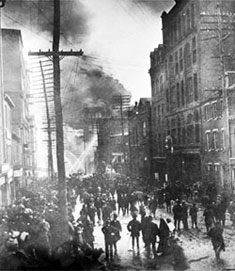
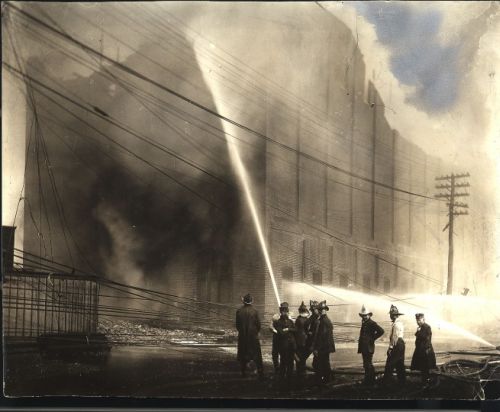
The Great Baltimore Fire of 1904 started at 10:50 a.m. on Feb. 7 and raged on until 5 p.m. the next day.

The fire began inside the John E. Hurst & Company building, causing an explosion that sent flames on to adjacent buildings. In minutes, surrounding buildings were ablaze and the fire continued to sweep through parts of downtown, in large part due to wind and lack of standardized fire-fighting equipment. Calls for help were telegraphed to other cities including Philadelphia, New York, and Washington D.C., who sent assistance.

According to the Fire Museum of Baltimore, some 1,231 and 1,200 National Guardsmen were needed as part of the effort. In about 30 hours, 140 acres of downtown Baltimore had burned, taking down 1,526 buildings and 2,500 businesses in its fury.

Two years later, The Baltimore Sun reported that the city had risen from the ashes and “One of the great disasters of modern time had been converted into a blessing.”

The Sun’s Jacques Kelly (whose grandmothers were present in Baltimore when the fire occurred) speaks more on the fire that ravaged and destroyed parts of downtown Baltimore and its aftermath:
“Slideshow: Great Baltimore Fire of 1904” at The Baltimore Sun.

BmoreFire1904

More photos at Baltimore Sun’s “The Darkroom”

Posted in 1900s | Tagged | 1 Comment

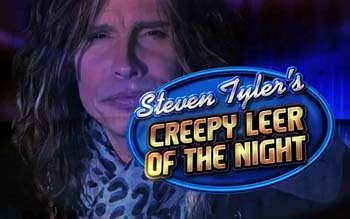
Jimmy Kimmel Pokes Fun at Steven Tyler’s Creepy Leer Towards Baltimore Waitress

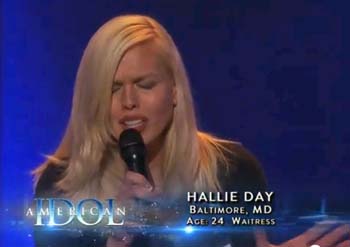
Jimmie Kimmel poked fun at Steven Tyler’s creepy leer when Baltimore’s Hallie Day performed on American Idol.


Hallie Day on Facebook

In the story above, Hallie returns home to Baltimore to live in this shack.

Posted in Baltimorons, Music | Leave a comment

The Telegraph Has Arrived: “Time and Space Has Been Completely Annihilated”

By Rebecca J. Rosen (The Atlantic, 2/14/2012)

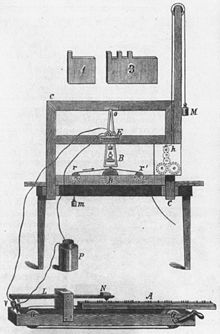
There have been many, many times over the last few decades when a new technology delivered a certain moment of awe: the first time I saw a video stream over the Internet, or the first time I navigated a touchscreen. But what must it have been like for those in the 19th century who learned of the ability to send information — Morse code — across electrical lines at speeds previously inconceivable?

Wikipedia.org

Writer and technologist John Battelle is researching early responses to the new telegraph technology, and says that “the invention incited an innate religious response.” The machine, he notes, “as such a massive shift in the possible, it was best to ascribe its power to God.” Fittingly, when Samuel Morse sent a message to open the first telegraph line between Washington and Baltimore, he selected a Biblical quotation as his text: “What Hath God Wrought.”

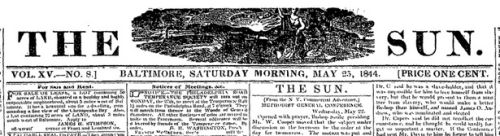
Inspired by Battelle’s description, I decided to go looking into the archives of the Baltimore Sun, which had closely covered the progress of the Baltimore-Washington line (and whose archives are available going back to 1837 on ProQuest). I didn’t find the religious sensibility he described, but what I did find pulses with an earlier iteration of the technological hope and wonder that we continue to experience today. Below are a few of my favorite clips.

May 31, 1844:

“Prof. Morse’s Telegraph has already, during the first week of its operations, been proved to be of the greatest public importance. Time and space has been completely annihilated.”

Continue reading “Time and Space Has Been Completely Annihilated” at The Atlantic.

Posted in 1840s | Leave a comment

How Barry Levinson’s Diner Changed Cinema, 30 Years Later

Much Ado About Nothing

For a little movie without special effects, dramatic reveals, or cutting-edge sex scenes—a movie about nothing at all, really—Barry Levinson’s 1982 comedy, Diner, caused a tectonic shift in popular culture. It paved the way for Seinfeld, Pulp Fiction, The Office, and Judd Apatow’s career, and made stars of Mickey Rourke, Kevin Bacon, Ellen Barkin, and Paul Reiser. Three decades later, S. L. Price reports how a novice director and his raw cast broke all the rules—and stumbled into genius.

By S. L. Price (Vanity Fair, March 2012)
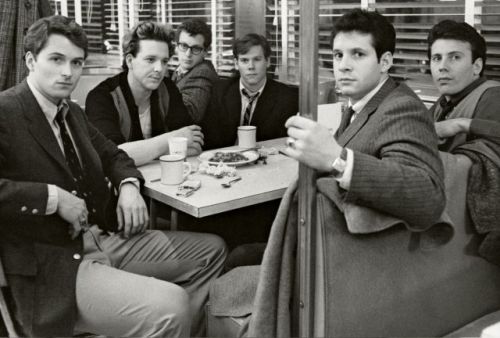
TABLE TALK: On the set of the Fells Point Diner, 1981; the diner itself had been trucked to Baltimore from New Jersey. From left: Tim Daly, Mickey Rourke, Daniel Stern, Kevin Bacon, Steve Guttenberg, and Paul Reiser. (Photograph COURTESY OF PAUL REISER.)

Nick Hornby knew better, but he didn’t care. Because suddenly there was that face—the upturned nose, the lupine grin, the wary expression barely softened by the passage of, what, three decades now? Everyone else in the London club that December night was flittering around Colin Firth, set aglow by the Oscar buzz for his performance in The King’s Speech. Hornby let them flit. For here stood … Kevin Bacon. Undisturbed. That knowing smirk may have derailed him as a leading man, but it has allowed for a career of darker, richer roles—and allows him still to cruise a cocktail party longer than most boldfaced names without some fanboy rushing up to say how wonderful he is.

God knows, Hornby had seen that too often: an actor friend, eyes darting, cornered by a gushing stranger. This belated celebration of Firth’s 50th birthday was a private bash where artists and actors, people like Firth and Bacon—and, well, Hornby—could expect to relax. After all, between best-selling books such as About a Boy and a 2010 Academy Award nod earlier in the year for his screenplay for An Education, he had been cornered plenty himself.

Yet when he saw Bacon, Hornby couldn’t help it. He edged closer. It was like that scene from Diner when Bacon’s buddy sees a boyhood enemy in a crowd and breaks his nose: Hornby had no choice. In 1983 a girlfriend had brought home a tape of director Barry Levinson’s pitch-perfect comedy about twentysomething men, their nocturnal ramblings in 1959 Baltimore, their confused stumble to adulthood. Hornby was 26, a soccer fanatic, a writer searching for a subject. Diner dissected the male animal’s squirrelly devotion to sports, movies, music, and gambling. Diner had one man give his fiancée a football-trivia test and had another stick his penis through the bottom of a popcorn box. Hornby declared it, then and there, “a work of great genius.”

Continue reading “How Barry Levinson’s Diner Changed Cinema, 30 Years Later” at Vanity Fair.
Posted in Baltimore Films, Baltimorons | Tagged , | Leave a comment