With no more than a taste for good drink, brothers set out to revive a long-gone tradition while juggling their day jobs
By Jill Rosen, (The Baltimore Sun, 2/20/2011)
Christopher and Jonathan Cook are too young to remember the glory days of local liquor, when the unmistakable perfume of Maryland rye wafted over parts of Baltimore, when the sturdy spirit enjoyed status as the real man’s drink of the Chesapeake.
Even so, the brothers, who grew up on the Eastern Shore, are the best hope of reviving Maryland’s lost tradition.
The Cooks are poised to become the state’s first distillers in nearly 40 years, as they blend and bottle a recipe for a premium wheat vodka they’re calling Sloop Betty. The brothers know they are rewriting a chapter in Maryland history, even as they quench regional cocktail enthusiasts’ thirst for artisanal spirits and fulfill a dream shared by countless deskbound professionals — to use their hands to create something real.
Continue reading “After Nearly 40 Years, Distilling Returns To Maryland” at The Baltimore Sun.
By Frederick N. Rasmussen, (The Baltimore Sun, 2/26/2011)
…During rye whiskey’s golden age, connoisseurs across the land instantly associated Wight’s Sherbrook, Old Reserve, Ryebrook, Mount Vernon, Sherwood Pure Rye, Hunter’s — “First Over the Bars” — and Pikesville Rye, to name only a few that were once distilled here, with Maryland.
The distilling of rye whiskey in America goes back to the 1700s, when farmers who had planted rye and wheat as cover crops over tobacco-ravaged land found it was easier and more profitable to distill rather than ship the surplus grain.
George Washington’s overseer at Mount Vernon, John Anderson, urged him to turn his surplus rye into whiskey and established a distillery on the grounds. The formula was simple: rye grain, malted barley and Indian corn.
Continue reading “Rye Whiskey Was Once Synonymous With Maryland” at The Baltimore Sun.
I write this valentine in Old Bay and blood, Baltimore, because I love you. I’m enthralled by you, besotted with you, I carry you in my heart like the first boy I kissed whose braces cut the inside of my mouth to juicy shreds, I loll and roll before you like a cat in heat waiting for the tomcat prick that’ll scrape her up on the way out, I endure your slaps and misfortune like Guido Crepax’s Valentina, chic in Louise Brooks bangs and India ink leather, afloat in a masochistic cloud of her own making. If I was smart I’d abandon you for a Rudolph Valentino of a city, a sheik like Portland or Austin or, god help me, Brooklyn, who’d swaddle me in his hipster-friendly embrace and romance me with burning eyes. Loving Baltimore instead is like being Cagney’s moll—it’s only a matter of time until you get a grapefruit in the kisser.
Despite that, I’m yours, Baltimore, no matter how your kisses back to me are few and far between (the valentine archive secreted in the greeting card archive at the Pratt Library, the neon heart outside the American Visionary Art Museum). I’m a hundred miles north in Philadelphia, city of brotherly love, and yet your good points are easier to see from faraway. Now that I’m finally free of your gravitational pull, I’m as lonely as first-woman-in-space Valentina Tereshkova, twirling in orbit, nauseous and rootless and miserable until crashing home again. I can hear your cackle as you eye my retreating ass: “I hate to watch you leave, baby . . . but I love to watch you go.”
“Ah luv t’ wotch yew gay-o.” That Baltimore “o,” dipthong shibboleth extraordinaire. Why does it not have its own special phonetic designation, like “ñ” or “ü,” to honor its drawling, pan-vowelic slide? That primal “o” is my Sanskrit “om,” the sound the universe makes: the “O!” barbarically yawped en masse during “The Star Spangled Banner” at Orioles games. And the yonic Orioles’ o logo, with its flirty cursive curl across the forehead (“And when she was good, she was very, very good . . .”)—what is it but a Palmer Method cooch? The big O, indeed. I give our “o” a phonetic symbol: I give it ♥. Give it a spin aloud in this Baltimore “rain in Spain” sentence from my friend (and fellow ex-pat) Jen Hubbard: “H♥n, he hit him ♥ver the head s♥ hard with a C♥ke bottle he had to call the p♥lice and an ambulance.”
How do you so effortlessly engulf me, Baltimore, like the Blob at the end of Kid’s Baffle? Saturday mornings, WJZ-TV, Baltimore’s William Hurt-lite host Bob Callahan asking nervous kids beat-the-clock questions (“Name something a fireman would say,” I distinctly remember) to the mock-Benny Goodman strains of the Cantina Band song from Star Wars, the kids trying to belch up an answer before the wobbly video chroma-key superimposed over their faces engulfed them, munch munch. You chomp me up, Baltimore. You clean me like a crab, scoop out my mustard, trash my puny shell. You scar me like you scarred my father. He was 8 years old in 1958, a husky kid in left outfield bleacher seats at Memorial. A pop fly went over his head. To follow its thrilling path he skidded his chubby butt over the rough plank of the bleacher. That night his mother had to pick a dozen needles of wood out of his behind. She couldn’t get them all. He didn’t mind. I understand completely. I want to carry splinters of you inside me.
I love you carnally, Baltimore—sloppily, smokily, Jack and Coke-ily, like a Heavy Metal Parking Lot slattern. (Hell yeah! Hell yeah! I’d jump his b♥nes.) I want to lick the incinerator smokestack emblazoned BALTIMORE, billowing Mobtown incense over the base of I-95. I rub trash dust in my eyes and I’m the girl in the Irish folktale in Eightball No. 11: “Sometime after [placing magic ash in her eyes] the girl went to a fair . . . She was able to see many people who couldn’t be seen by others at all.” I’ve got Charm City-voyance, I see past laid on future: Haussner’s, Hammerjacks, Memorial Stadium (what a meta-recall backflip that is, to remember a place named Memorial). I still see the Orpheum theater, STAB bat on the water tower, Blood Circus ads in the Baltimore News American, Blaze Starr’s rack, Marty Bass’ toupee. Roses are red, this Violet wants you. I’m yours, Baltimore! Oh! O! ♥!
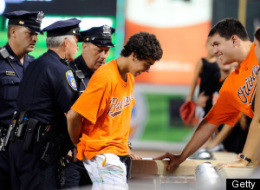
Today is your last opportunity to be arrested at a major league ballpark on 33rd Street.
And if it is your desire to take a little piece of Memorial Stadium with you as a keepsake of the Baltimore Orioles’ last home game ever in Waverly, there will be 150 police officers — three times the normal detail — on hand to lock you up for theft.
The police expect a wisenheimer or two to try and get away with a chair or a brick or a slice of turf, and if they catch one, that person will experience the last big-league go-’round for an old, black prison cage known as “Farace’s Condo.”
That’s Farace, as in Lt. Phil Farace of the Baltimore Police Department, the happy-faced man known around the ballpark as “Uncle Phil” and top officer at Memorial Stadium since 1975.
“In my 16 years here I’ve learned how to get along with people in large groups,” Lieutenant Farace said. “I’ve learned how to deal with anything, from the man in the bleachers to the queen of England.”
When the Orioles move to their new home in Orioles Park at Camden Yards for the 1992 baseball season, the police will move along with them, to new offices and a new detention area inside the stadium. Lieutenant Farace was asked for suggestions to make the new detention area better than the old one.
Now under construction at Camden Yards, just behind the main ticket windows facing southbound Russell Street are a pair of narrow rooms measuring 6 feet by 6 feet 8 inches and equipped with metal security doors.
This is where the police will hold the drunks who make trouble, the ticket-scalpers, the pickpockets, brawlers and bad guys who find themselves under arrest at the new ballpark.
Unlike most of the other offices at the new stadium, the walls of the twin holding cells will not be made of plasterboard; they are cinder block. “We don’t want someone kicking their way out,” said Stewart Ervie, an on-site architect at Camden Yards.
Lieutenant Farace, 63, said he will spend one more baseball season on the force, breaking in the new lock-up for a successor, before retiring.
“When I was promoted to lieutenant, the [police] commissioner gave me this job. I didn’t ask for it,” he said. “I didn’t even know it existed.”
Since then, Lieutenant Farace has met two presidents and Queen Elizabeth II, made close friends with some of the all-time heroes of America’s national pastime — from Earl Weaver to Reggie Jackson to Brooks Robinson — and participated in scores of arrests.
Continue reading “Not all the slammers at Memorial ended in runs” at The Baltimore Sun.
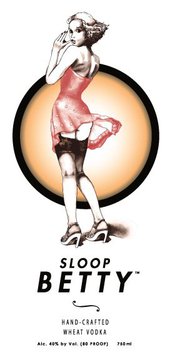 The Cooks are poised to become the state’s first distillers in nearly 40 years, as they blend and bottle a recipe for a premium wheat vodka they’re calling Sloop Betty. The brothers know they are rewriting a chapter in Maryland history, even as they quench regional cocktail enthusiasts’ thirst for artisanal spirits and fulfill a dream shared by countless deskbound professionals — to use their hands to create something real.
 I write this valentine in Old Bay and blood, Baltimore, because I love you. I’m enthralled by you, besotted with you, I carry you in my heart like the first boy I kissed whose braces cut the inside of my mouth to juicy shreds, I loll and roll before you like a cat in heat waiting for the tomcat prick that’ll scrape her up on the way out, I endure your slaps and misfortune like Guido Crepax’s Valentina, chic in Louise Brooks bangs and India ink leather, afloat in a masochistic cloud of her own making. If I was smart I’d abandon you for a Rudolph Valentino of a city, a sheik like Portland or Austin or, god help me, Brooklyn, who’d swaddle me in his hipster-friendly embrace and romance me with burning eyes. Loving Baltimore instead is like being Cagney’s moll—it’s only a matter of time until you get a grapefruit in the kisser.