BSO oboist Michael Lisicky’s books recall department stores of the past

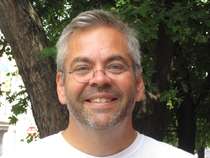
Michael Lisicky.

Michael Lisicky.

I love Mike Lisicky. As a librarian at Enoch Pratt’s Central Library, I’m used to seeing the match-fit BSO oboist and department store history buff make frequent stops in our Maryland and Periodicals departments – often fresh from a run and still clad in his running clothes (he runs 7-to-9 miles a day and has lost 90 pounds in the last 10 months) –  to research his numerous books on local department store chains. He’s an endless bundle of energy with an ever-curious mind about just about everything, and even finds time for social media – for some reason he follows my Facebook postings (though he’s the interesting one, not me!). And though he’s a professional oboist, he’s a modest guy who never toots his own horn, despite all the accolades for his books and musicianship (though if you inquire, he’s more than glad to talk about running, department stores or music). So I was glad to see him get profiled in the weekend Sun, as featured below.

– Tom Warner (Baltimore Or Less)

Woodward & Lothrop: A Store Worthy of the Nation’s Capital’ is latest release

By Mary Carole McCauley (The Baltimore Sun, November 16, 2013)

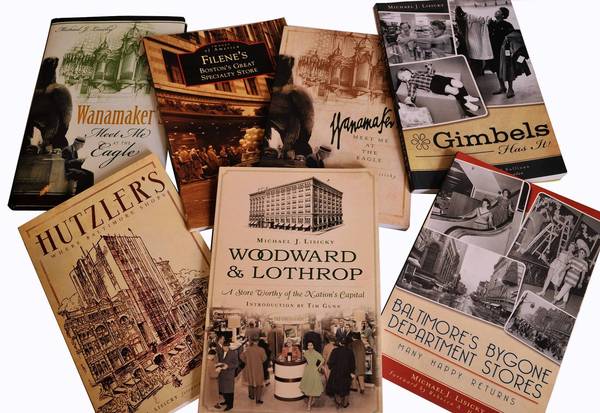
Michael Lisicky's department store books (Amy Davis, Baltimore Sun)

Michael Lisicky’s department store books (Amy Davis, Baltimore Sun)

You might think of Michael Lisicky’s obsession with department stores as an orchestral tone poem for a single oboe: at turns plaintive and raucous, eloquent and funny, with unpredictable little swerves.

Lisicky is second oboist with the Baltimore Symphony Orchestra and also plays the English horn. Two of his main obsessions — and the 48-year-old Lisicky has many — are music and his dedication to tracing the history of the elegant emporiums of the past. His love for these grand old stores has become a kind of shorthand for his love of his fun and gregarious late mother, Anne.

Continue reading “BSO oboist Michael Lisicky’s books recall department stores of the past” at baltimoresun.com.

Posted in Baltimorons, Media, Roadside Attractions, Shopping | Tagged , , , | Leave a comment

Pictures at an Ecks-ibition

By Tom Warner (Baltimore Or Less)

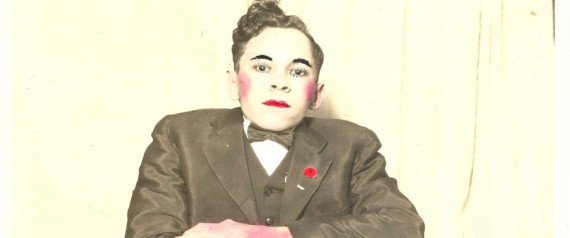
Johnny Eck (photo courtesy the Johnny Eck Museum)

Johnny Eck (photo courtesy the Johnny Eck Museum)

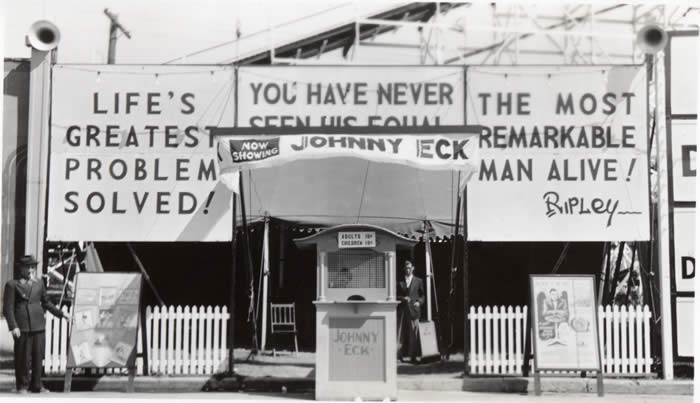
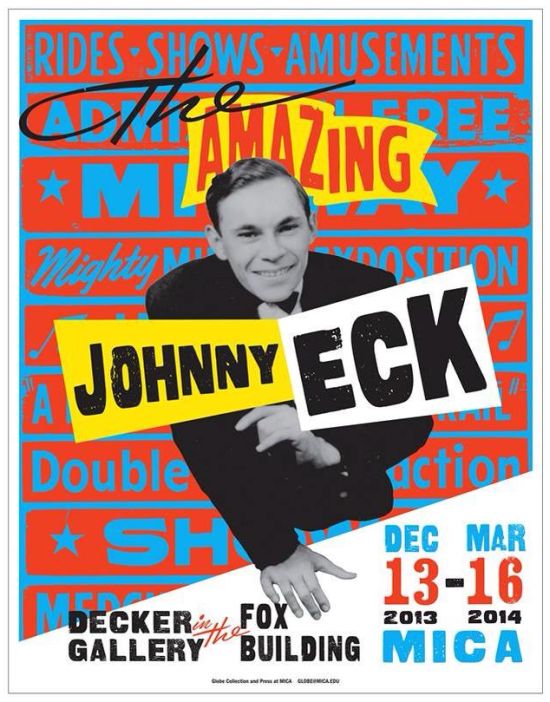
Johnny Eck – the legendary hometown “Half Man” sideshow performer, Hollywood actor (Tod Browning’s 1932 “Freaks“) and latter-day screen painter – will soon be the subject of an upcoming exhibition at the Maryland Institute College of Art. “The Amazing Johnny Eck,” curated by Johnny Eck Museum founder Jeffrey Pratt Gordon and featuring Eck’s screen paintings, scrapbooks, and other artifacts, runs from December 13, 2013 through March 16, 2014 and is billed as “the world’s largest” about this extraordinary man whom Robert Ripley once called “the most remarkable man alive.”

Ripley called Eck "The most amazing man alive!" Eck died in 1991.

Ripley called Eck “The most remarkable man alive!” Eck died in 1991.

“I’ve spent nearly two decades trying to understand the far-reaching arms of Johnny Eck. He touched so many people during his life and continues to do so decades after his passing. My motivation has always been to share his life with others through his personal letters, photographs, artwork and objects that helped define his multifaceted life.”
– Jeffrey Pratt Gordon, Johnny Eck Museum founder (quoted by VanishLive.com, “News, Articles and Reviews for Magicians”)

eckposter

According to MICA’s press release, “The Amazing Johnny Eck” will coincide with a second exhibition at MICA celebrating Baltimore culture: “PICTURE WINDOWS … The Painted Screens of Baltimore and Beyond.” From Friday, Dec. 13, 2013–Sunday, March 16, 2014, the Fox Building’s Meyerhoff Gallery (1303 W. Mount Royal Ave.) will house this exhibition that explores the history and cultural significance of the artistic painted screens throughout the city, beginning 100 years ago. (As a young man, Eck was a student of Baltimore’s original screen painter, William Oktavec, and when he returned from his film career in Hollywood, he picked up where he left off, painting screens for his neighbors and far-flung customers and admirers.) MICA also plans to screen the film Freaks in conjunction with a panel discussion and a circus performance. More details will become available closer to the exhibition opening.

Watch “Johnny Eck – Freaks Extra” (YouTube).

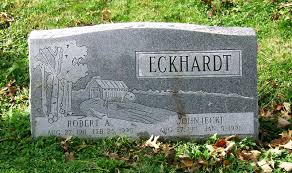
Johnny Eck is buried, alongside his brother Robert, at Green Mount Cemetery, 1505 Greenmount Avenue. They are located in Lot 19 of Section R under their original family name “Eckhardt.”

Johnny and Robert Eck are buried at Green Mount Cemetary.

Johnny and Robert Eck are buried at Green Mount Cemetery.

See also:

Click Right Here, Folks, For The World’s Largest Exhibition About ‘King Of The Freaks’ Johnny Eck

By Arin Greenwood (Huffington Post, 11/13/2013)

Johnny Eck once walked to the top of the Washington Monument on his hands. He couldn’t have done it any other way; he had no legs.

Eck was born in Baltimore in 1911, healthy despite missing the lower half of his body. In 1923 or 1924 — accounts vary — he and his twin brother Robert, who was fully developed, were plucked from the audience of a magic show to leave school and join the circus-world themselves.

The plucker, described as “an unsavory manager” who “would plague him for years” in Eck’s 1991 Baltimore Sun obituary, nonetheless set the so-called “King of the Freaks” on an irreplicable life path:

“I was a performer, walked a tight rope, worked on trapeze, juggled — I did everything,” Eck recalled in the book, “America’s Forgotten Folk Arts.”Eck relished life among society’s fringe elements.

“I met hundreds and thousands of people, and none finer than the midgets and the Siamese twins and the caterpillar man and the bearded woman and the human seal with the little flippers for hands. I never asked them any embarrassing questions and they never asked me, and God, it was a great adventure,” he told a Baltimore Sun columnist in 1979.

Eck’s appearances at the 1931 Canadian National Exhibition led FTC to a role in “Freaks,” Tod Browning’s controversial film about a loyal clan of deformed circus performers.

Later, Eck appeared briefly in two other Hollywood films and in a dramatic magic act in which he and a cooperative midget portrayed a man sawed in half.

At the end of his film career, Eck and his brother returned to Baltimore, where the two opened a penny arcade and started up a miniature train ride, among other enterprises. Johnny also became an accomplished screen painter (screen painting is a traditional Baltimore folk art; screen windows and doors are painted on the outside, to give residents more privacy).

Continue reading “Click Right Here, Folks…” at huffingtonpost.com.


Posted in 1930s, Art, Baltimorons, Celebrities, Highlandtown, Museums, Neighborhoods, Roadside Attractions | Tagged , , , , , | Leave a comment

Celebrating Jimi Hendrix’s 71th Birthday

Crosstown Traffic Alert: Train A Comin!
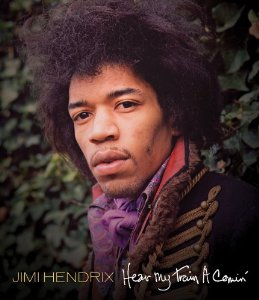
The DVD comes out the same day as the PBS documentary.

The DVD comes out the same day as the PBS documentary.

by Tom Warner and Scott Huffines

(November 5, 2013) – Tonight at 9 p.m. on PBS, American Masters will present a new two-hour documentary on pioneering rock guitarist Jimi Hendrix (Nov. 27, 1942 – Sept. 18, 1970), Jimi Hendrix: Hear My Train A Comin’. It’s part of a year-long celebration for the iconic rock star who would have turned 71 this month, and includes archival performance footage and interviews with Paul McCartney, Steve Winwood, Vernon Reid, Billy Gibbons, Dweezil Zappa, and Dave Mason, as well as former Hendrix band members Noel Redding, Mitch Miller and Billy Cox.

Besides focusing on his music, the program is notable for exploring Hendrix’s other great love:  women. According to the American Masters web site, the film “features  revealing glimpses into the three women closest to him: Linda Keith (the girlfriend who introduced Jimi to future manager Chas Chandler), Faye Pridgon (who befriended Hendrix in Harlem in the early 1960s) and Colette Mimram (one of the era’s most influential fashion trendsetters who provided inspiration for Hendrix’s signature look and created such memorable stage costumes as the beaded jacket Hendrix famously wore at Woodstock).”

The documentary is directed by Bob Smeaton and, yes, he is experienced, having previously worked on such music-themed films as The Beatles Anthology, Festival Express and the Hendrix projects Jimi Hendrix: Voodoo Child (2010) and Hendrix 70: Live at Woodstock (2012). He told Shadow and Act that what attracted him to the documentary was moving beyond interviews with Hendrix’s male peer musicians and talking to the ladies. “They say, ‘He was shy,’ or ‘He was gentle.’ The women bring an interesting insight, and maybe for once we know more about him.”

Watch the American Masters trailer for tonight’s special.

We can’t wait and already have the DVR set up to record it – but fear not, Hendrix fans! If you miss tonight’s broadcast, the Blu-ray and DVD are being released the same day. In fact, the DVD package will be accompanied by a CD with a previously-unreleased 1968 concert recording by the Jimi Hendrix Experience at the Miami Pop Festival that year.

Hendrix Was Here. 

As we celebrate Hendrix’s birth month, let us not forget the days when Hendrix played Baltimore and surrounding areas.

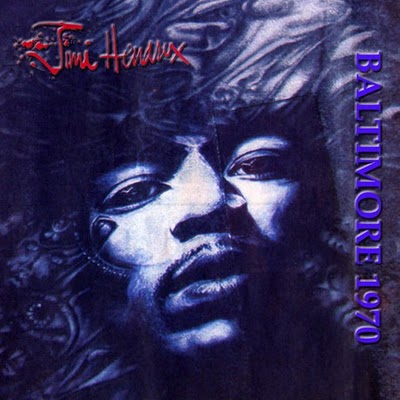
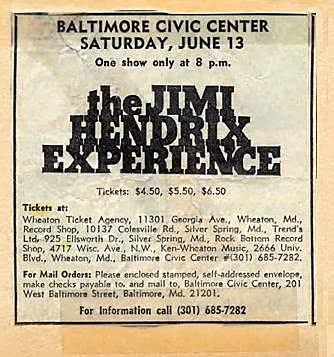
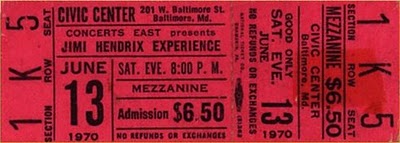
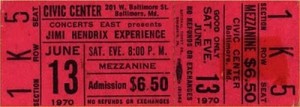
One of his most notable stops in Charm City, over 43 years ago, was a June 13, 1970 show at the Baltimore Civic Center – a gig that became a legendary bootleg and the last time Jimi would ever pass through our town. He died three months later that year.
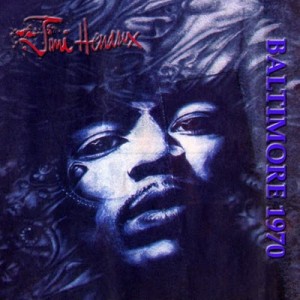
The Baltimore 1970 bootleg.

The Baltimore 1970 bootleg.

Hendrix’s band that day featured Billy Cox on bass and Mitch Mitchell on drums. The setlist was:
01. Pass It On
02. Lover Man
03. Machine Gun
04. Ezy Ryder
05. Red House
06. Message To Love
07. Hey Joe
08. Freedom
09. Hear My Train A Comin’
10. Room Full Of Mirrors
11. Foxy Lady
12. Purple Haze
13. Star Spangled Banner
14. Voodoo Child (Slight Return) / Keep On Groovin’

According to Rock On Vinyl, “The source…is an excellent audience recording captured on a Panasonic portable reel to reel tape recorder and has been ripped to mp3 (320kps). This bootleg has been released under a variety titles and artwork…Normally, audience recordings are fairly poor quality, but this one is an exception. Although there are some crowd noises the clarity of the music is first class and this bootleg is a must for any Hendrix collection.” (See the blog Rockonviny for details about this show, whose bill also included Cactus and Ballin’ Jack.)
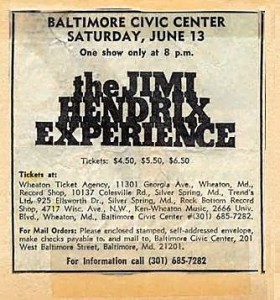
Baltimore Civic Center, June 13, 1970. Tix as low as $4.50.
Baltimore Civic Center, June 13, 1970. Tix as low as $4.50.

Baltimore Civic Center, June 13, 1970. Were You Experienced there?

Baltimore Civic Center, June 13, 1970. Were You Experienced there?

Jimi Hendrix- Baltimore Civic Center, Baltimore, Maryland 6/13/70
Synced to 8mm home movie footage shot at the concert.

Jimi Hendrix- Baltimore Civic Center, Baltimore, Maryland 6/13/70


wilson mcphert

The following is an excerpt from a review of the concert by James Dilts in the Baltimore Sun, June 21, 1970:

“Jimi Hendrix appears, resplendent in a purple ruffled shirt, green bell-bottoms, a silver spangled vest that ended at the shoulder blades, a multi-coloured headband that trailed down his neck, a bright silk scarf tied to his left arm, and a fringe belt that hung down his right leg. Hendrix seems to have given up the sideshow antics, except for a brief few bars near the end of the concert when he played the guitar with his teeth….It’s just that music is now at the center of the group’s presentation which is, of course, where it should be…

…After a final number, one fist raised in the symbol of rebellion, the other giving the peace sign, Hendrix was off the stage as quickly as he had appeared. “Right on” shouted several people in the crowd. Nobody’s Going To Upstage Hendrix!”

Jimi Hendrix- Baltimore Civic Center, Baltimore, Maryland, 5/16/69

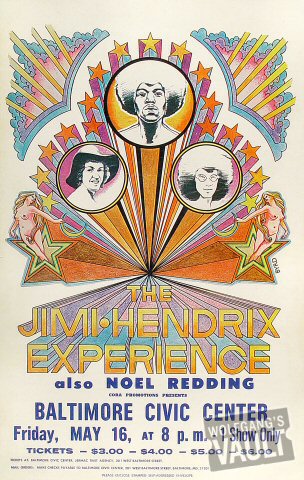
Hendrix also played the Civic Center in 1969. Here’s the poster created by David Byrd (Bill Graham’s exclusive Filmore Easter poster artist) for that show, reprinted courtesy of Wolfgang’s vault.
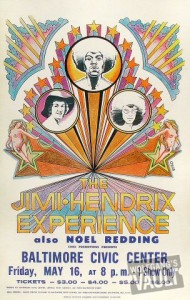
BCI690516-PO

Hendrix Was Also There.

See also our pal Jeff Krulik’s excellent article – with David Montgomery –  for the Washington Post about Hendrix playing DC in 1967: “When Jimi Hendrix came to Washington and blew its mind” (Washington Post, July 18, 2013).
Posted in 1960s, 1970s, Music | Tagged , | Leave a comment

The Death and Burial of Edgar Allan Poe

(Maryland Historical Society, 10/22/2015)

The mysterious death of writer Edgar Allan Poe still haunts and fascinates his fans and biographers. The facts of his untimely passing in 1849 have been obscured and confused since he was found barely conscious in a Baltimore tavern. Even the events and location of Poe’s burial have been shrouded in enigma.

On September 27, 1849, Poe left Richmond, Virginia for New York via Baltimore and Philadelphia. He was slated to edit the work of fellow poet, Marguerite St. Leon Loud, while in Philadelphia. After he completed this work, he would travel to New York to pick up his aunt and former mother-in-law, Maria Clemm, and bring her back to Richmond to attend Poe’s wedding to Elmira Shelton. Poe never made it to New York. He was instead waylaid in Baltimore, where he met his end.

B209-4 Poe’s Memorial Grave

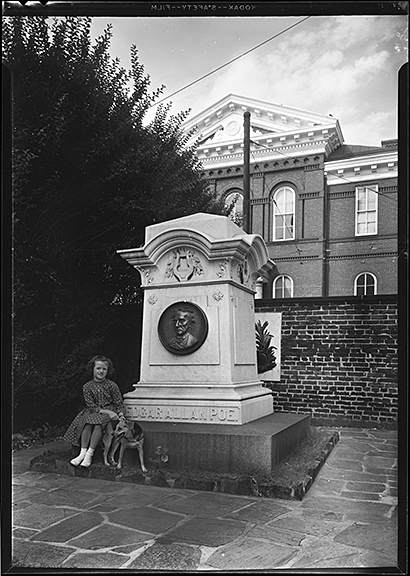
A slightly ghoulish image. A girl and her dog with Poe’s remains. Poe’s Memorial Grave, October 21, 1956, A. Audrey Bodine, B209-4, Baltimore City Life Museum Collection, Maryland Historical Society.

The events of the days following his departure remain tantalizingly elusive. On his way to the train to Philadelphia in Baltimore, it appears he ran into some old friends and was convinced to have a drink with them, even though he had recently joined the Sons of Temperance. That was the last anyone heard of Poe until he was found on October 3 at Gunner’s Hall, a Fourth Ward polling place, located at what is now the 900 block of East Lombard Street, in a state of stupor and disarray. Poe’s friend Joseph Evan Snodgrass and his uncle Henry Herring were summoned to fetch the near comatose bard. Snodgrass was completely shocked at the condition of his friend, later recalling, “…I instantly recognized the face of one whom I had often seen and knew well, although it wore an aspect of vacant stupidity which made me shudder. The intellectual flash of his eye had vanished….”(1) He also noted that the clothing Poe wore could not possibly be his own. Not only were they filthy, but they were cheaply made and ill fitting, which was very uncharacteristic for a man known for his smart dressing. He was taken to Washington College Hospital (later the Church Home and Hospital), where he died four days later. His illness was marked by fits of delirium and nonsensical ramblings. He repeatedly called out the name “Reynolds.” “Lord, help my poor Soul,” were his last words before he expired on October 7th.

Theories abound as to what caused his death: an alcohol or drug overdose, untreated diabetes, rabies, and even murder. The official cause of death at the time was “congestion of the brain.”

Continue reading at
Maryland Historical Society’s “Underbelly” Blog.

Posted in 1840s, Baltimorons, Deaths, Edgar Allan Poe | Tagged | Leave a comment